Capstan
Four tape loops, four sounds, no clock.
A four-channel free-running tape looper with a built-in synth voice, for iPhone and iPad.
Coming to the App Store
Be the first to know when it ships.
Thanks — we'll email you when it launches.
Every loop keeps its own sound.
Capstan plays one note at a time — the loops are the chord. Put a sub drone on 1, an electric piano on 2, a lead on 3 and a pluck on 4: select a channel and the pads play its sound, and anything you load, tweak or roll belongs to that loop. Save all four as a set and the whole bench comes back in one tap. Each loop keeps its own length too, so they scroll at different rates and drift out of phase. And FADE never quite reaches unity, so every loop, eventually, dissolves.
A live tape-loop instrument,
not a DAW.
Play a pad, watch it spool onto tape, layer the next loop over it, and ride four loops of different lengths as they drift and slowly dissolve. The machine has a tempo for the arpeggiator to divide, but nothing follows it as a clock: no quantise, no metronome. Just tape — the same tape model as its sibling, Oxyde.
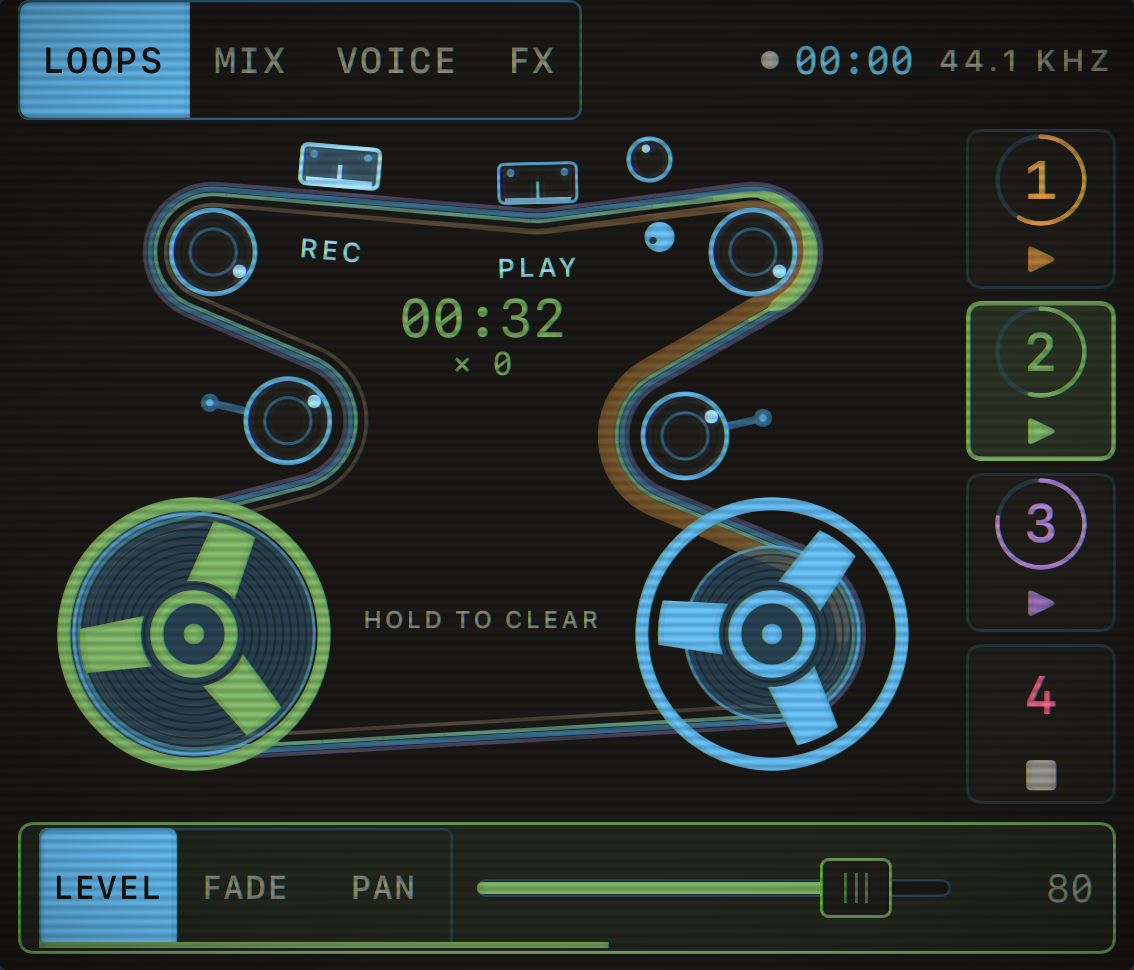
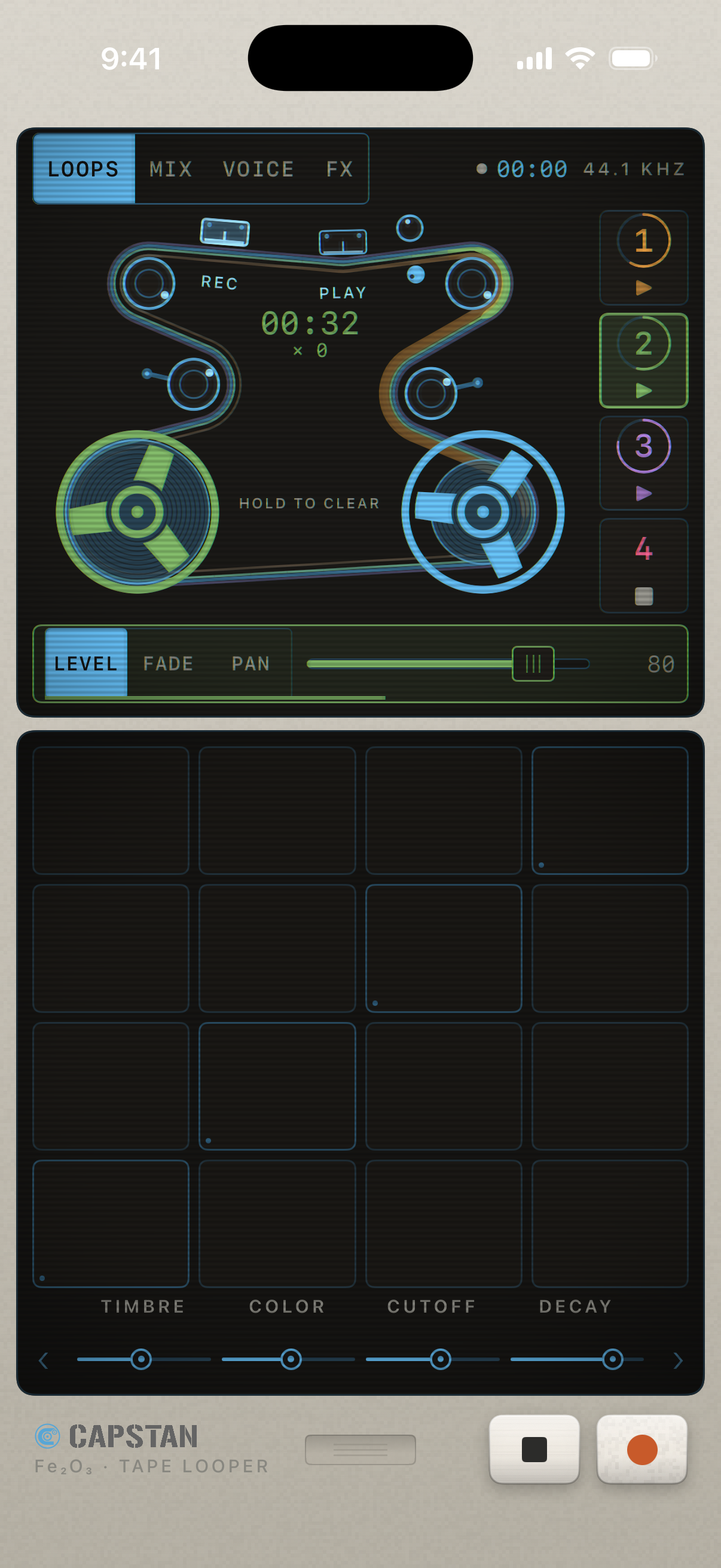
Two reels, two idlers, a REC head and a PLAY head, carrying four nested tapes. Tap to arm and the loop waits for your first note; tap again to seal it. A ring on each channel sweeps round with its loop, so you can see the seam coming. Up to three minutes a loop.
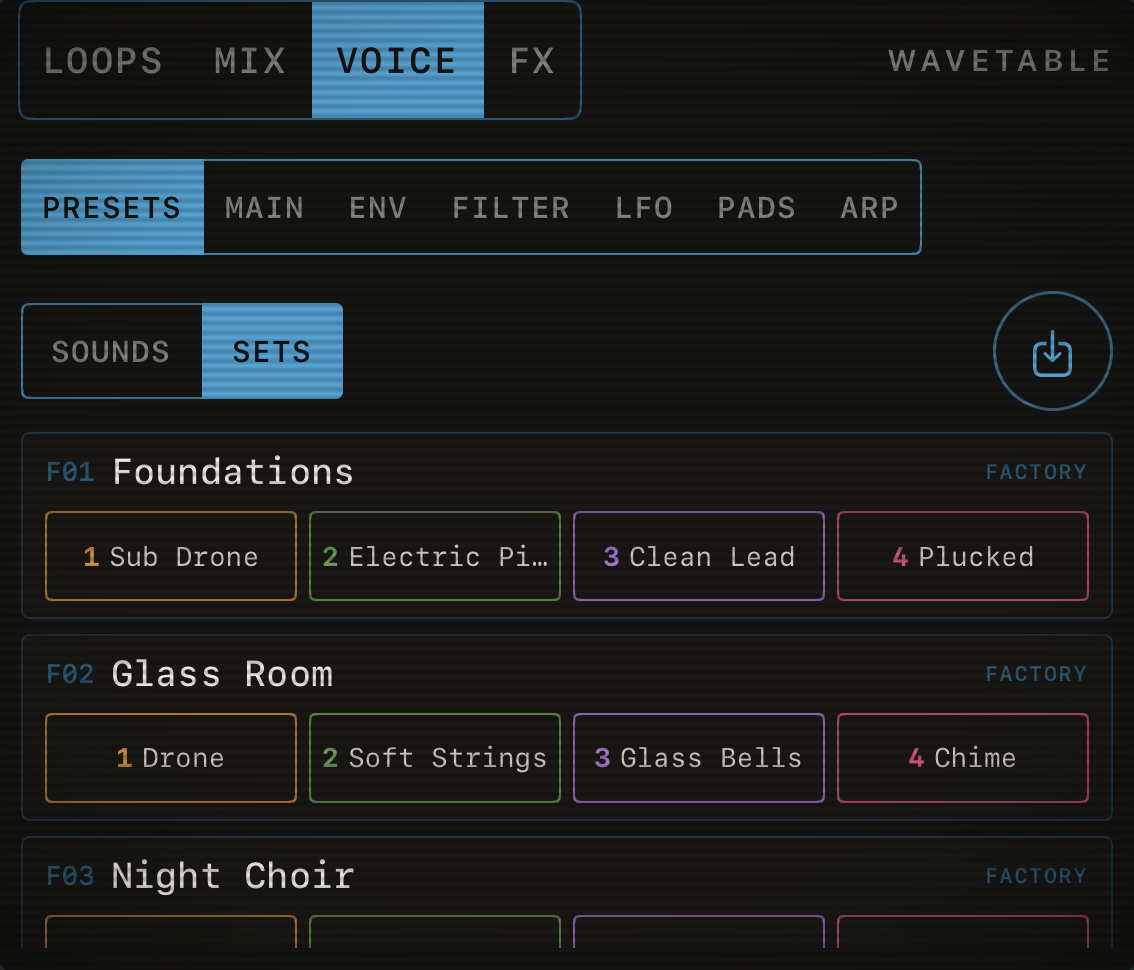
37 factory sounds across 21 engines — the Plaits cores and a sampler — with ladder, OTA and SVF filters. Twelve factory sets put a sound on all four loops in one tap. Save your own, tag them, or let RANDOM roll a new one.
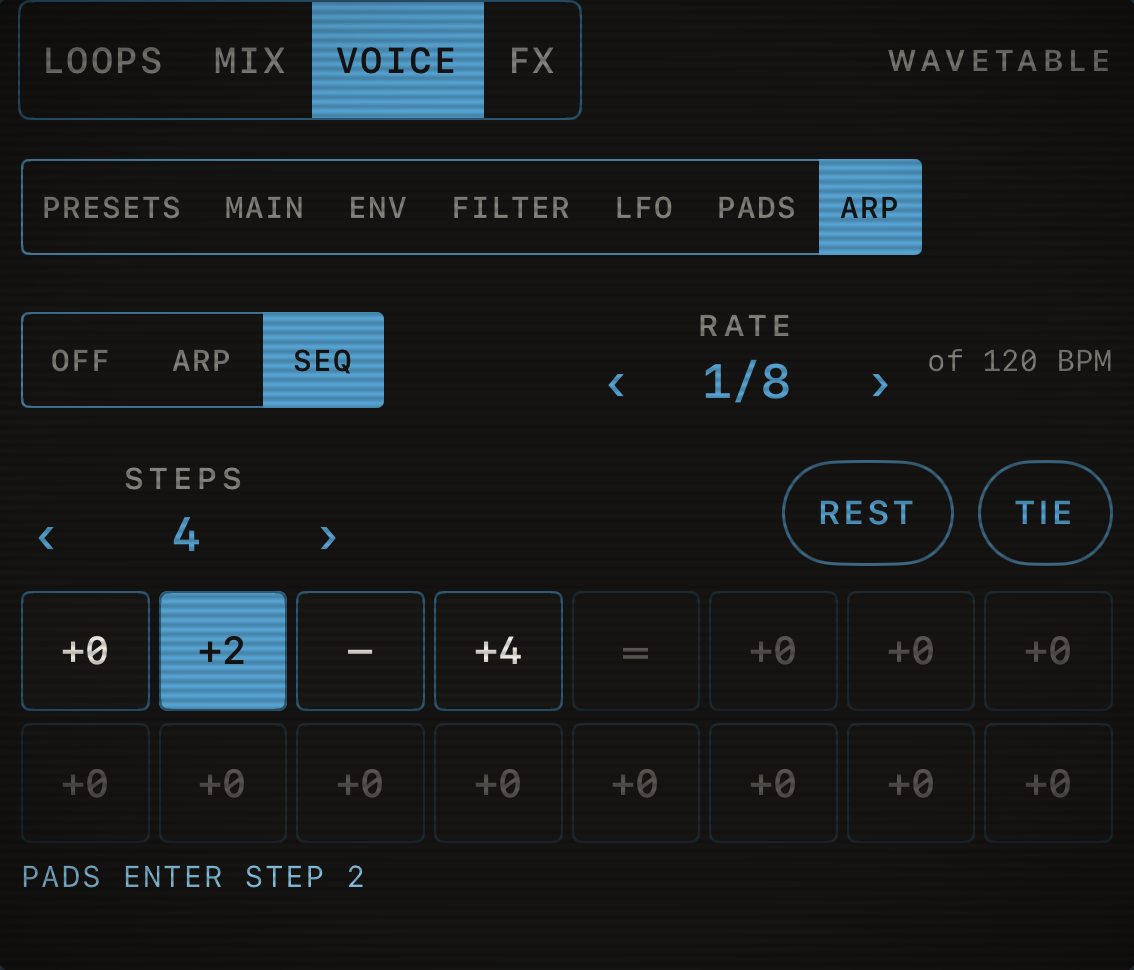
Hold two pads and the arpeggiator walks them — up, down, up-down, as played or at random — at a division of the machine’s tempo. Switch to SEQ and a held pad plays a sixteen-step pattern of scale degrees, rests and ties.
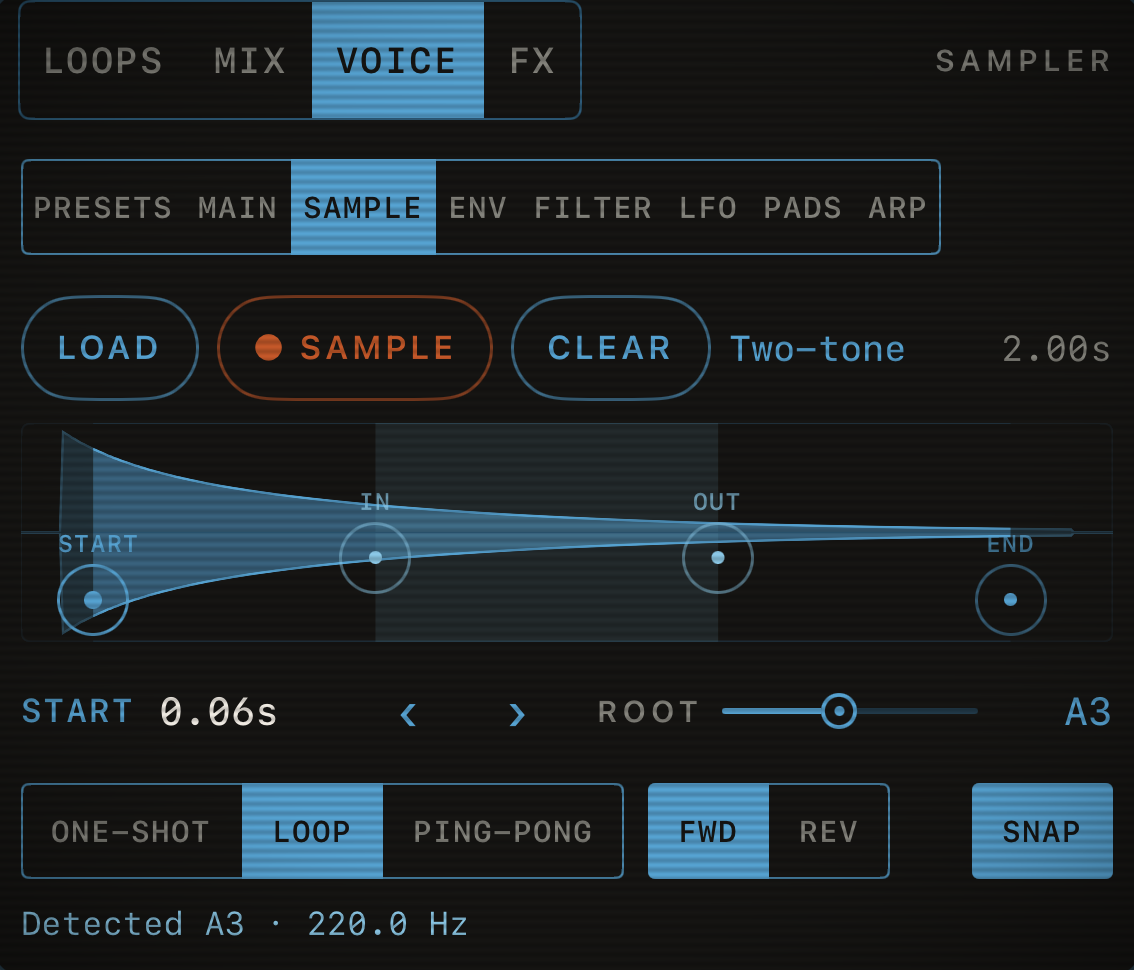
Record from the microphone or load a file. Capstan finds the pitch and plays it chromatically across the pads. Drag start, end and the loop points on the waveform; play it forward, reversed or ping-pong. A preset keeps its sample.
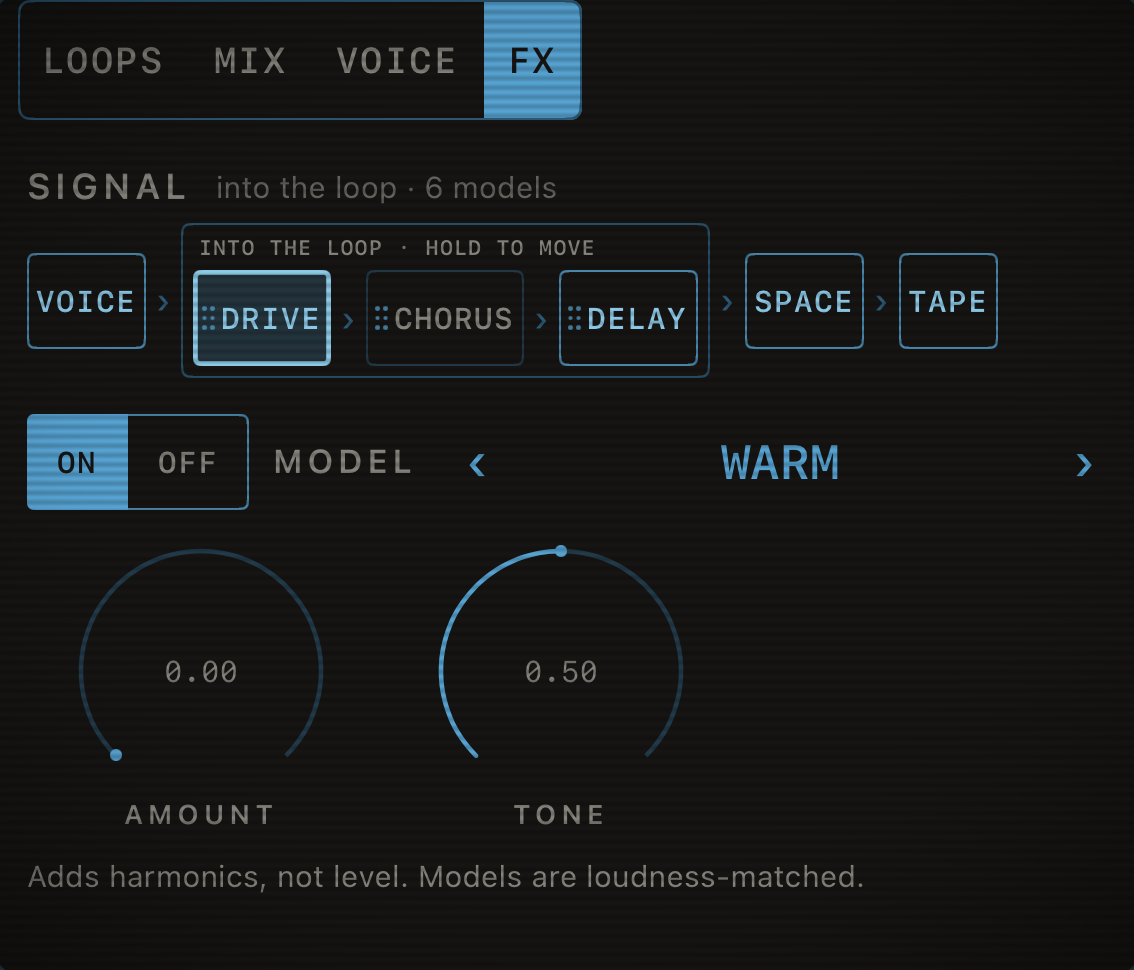
DRIVE with six models, CHORUS with seven modes, and DELAY are printed into every layer, so a wet loop stays wet. Hold a stage and slide it to put the three in any order you like, per sound.
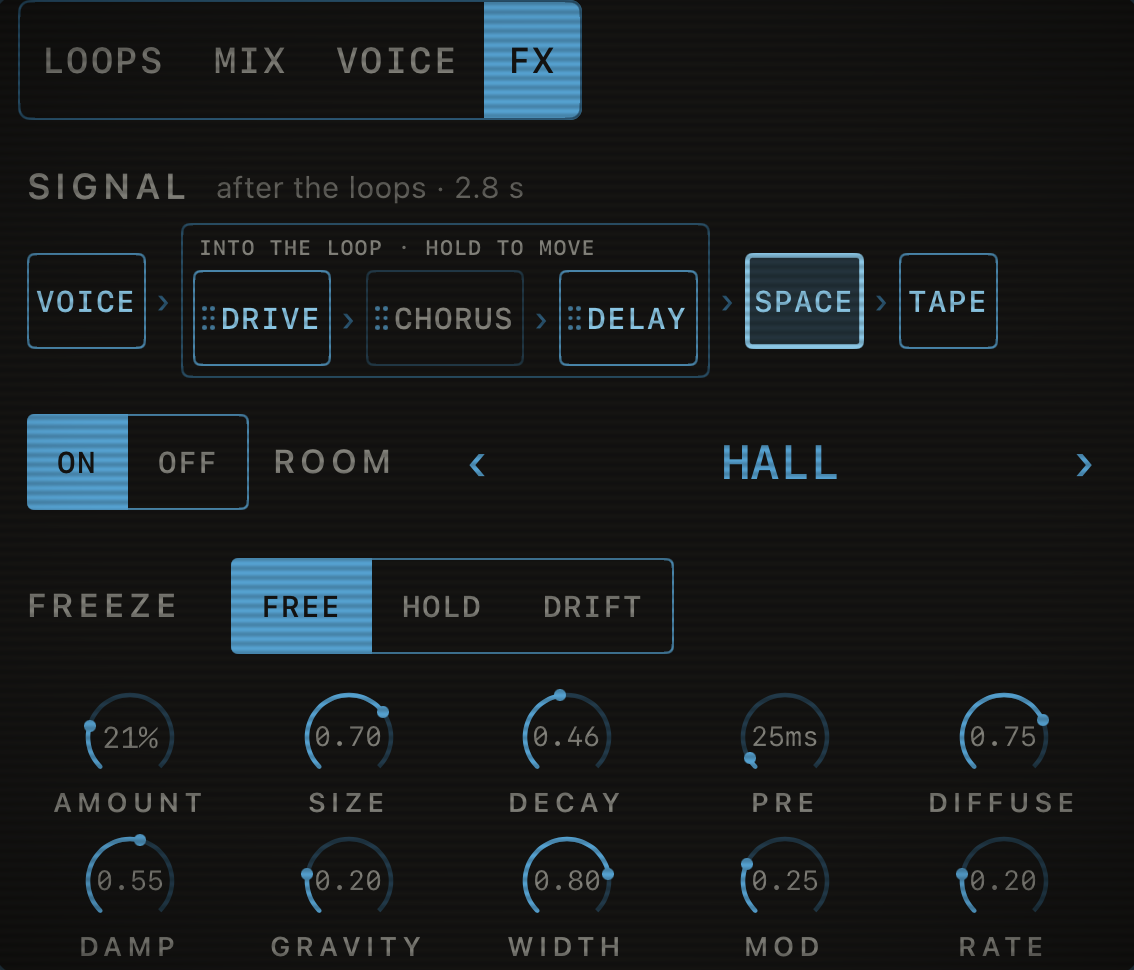
The four loops sum into a stereo reverb — room, chamber, hall, plate, bloom and the long VOID, with freeze — then a tape model with three speeds, then a limiter. Record the performance as 24-bit WAV, with a clean copy beside it. The loops themselves are never saved.
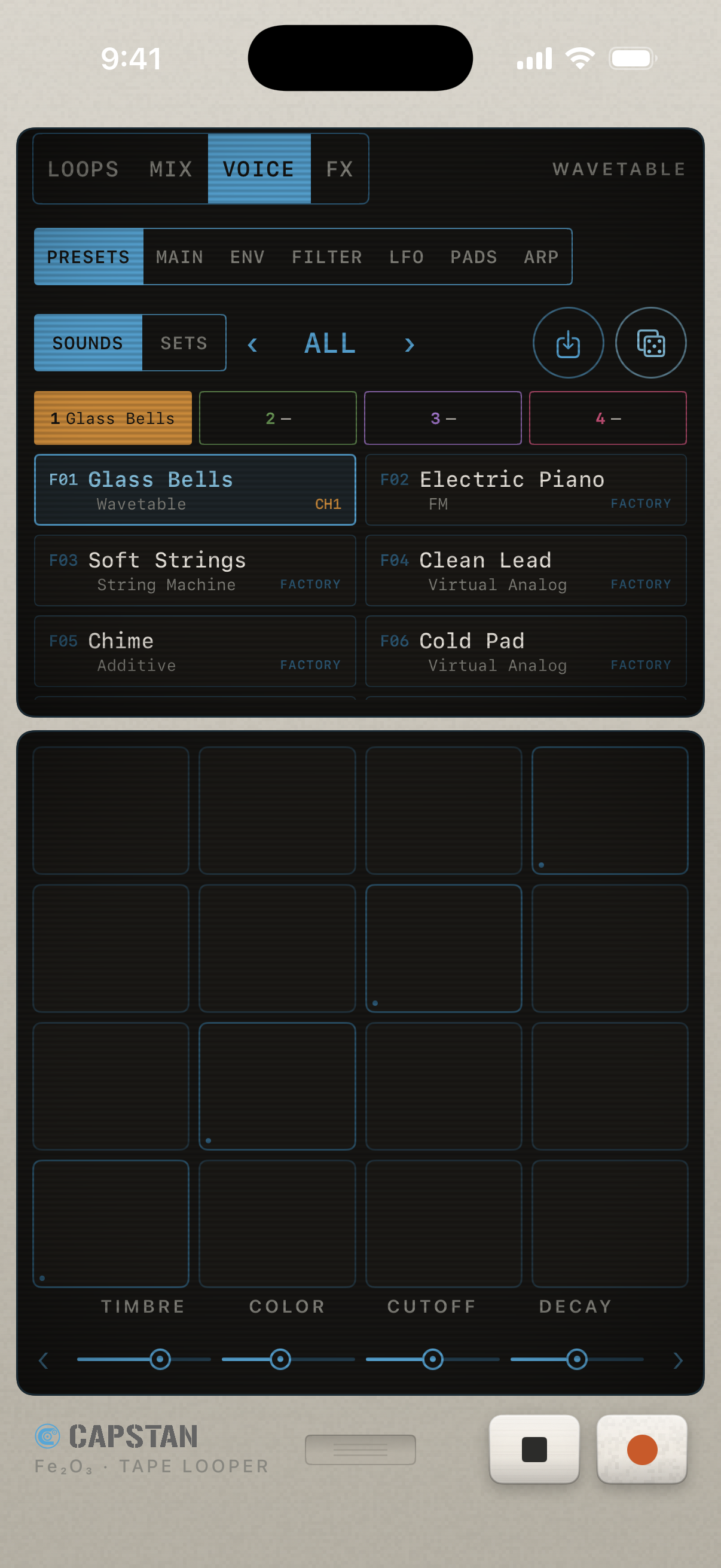
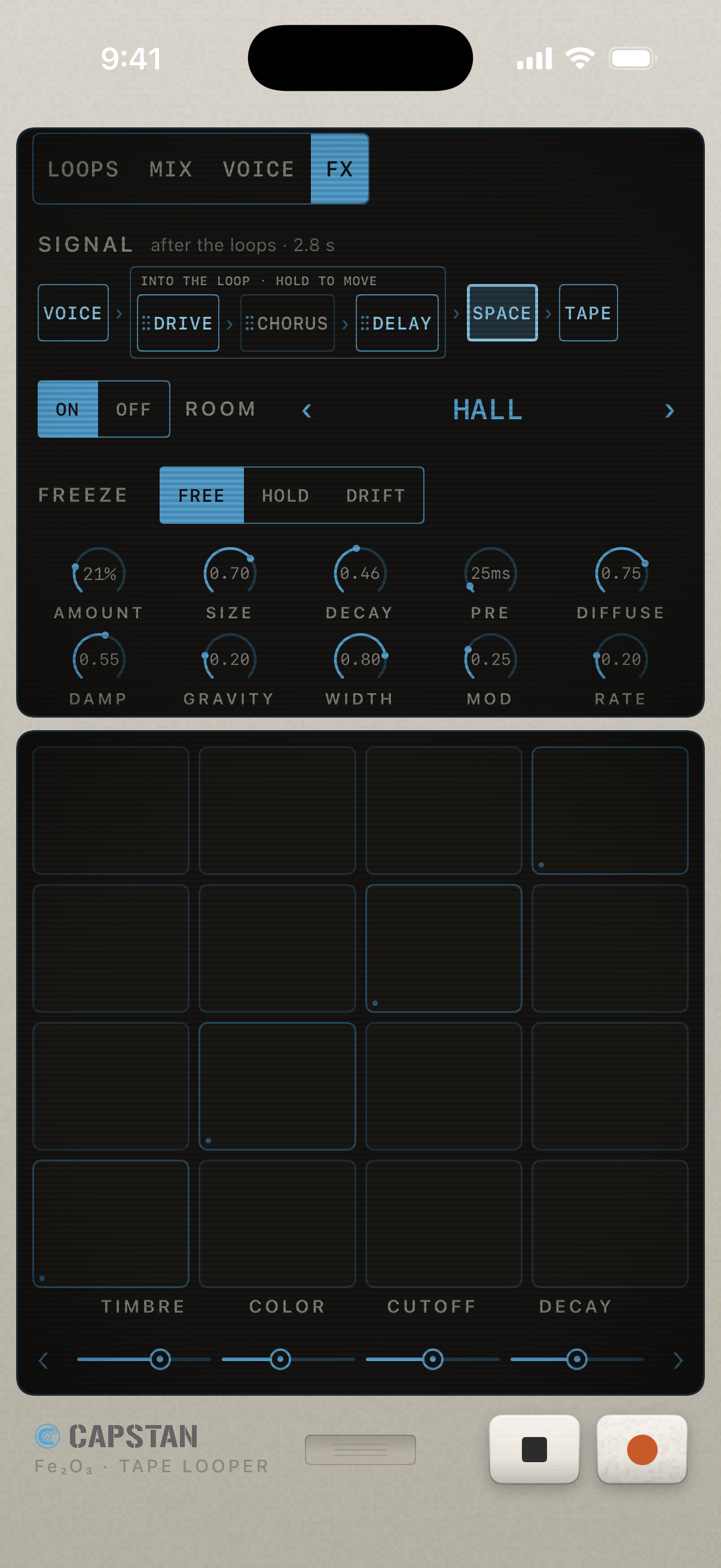
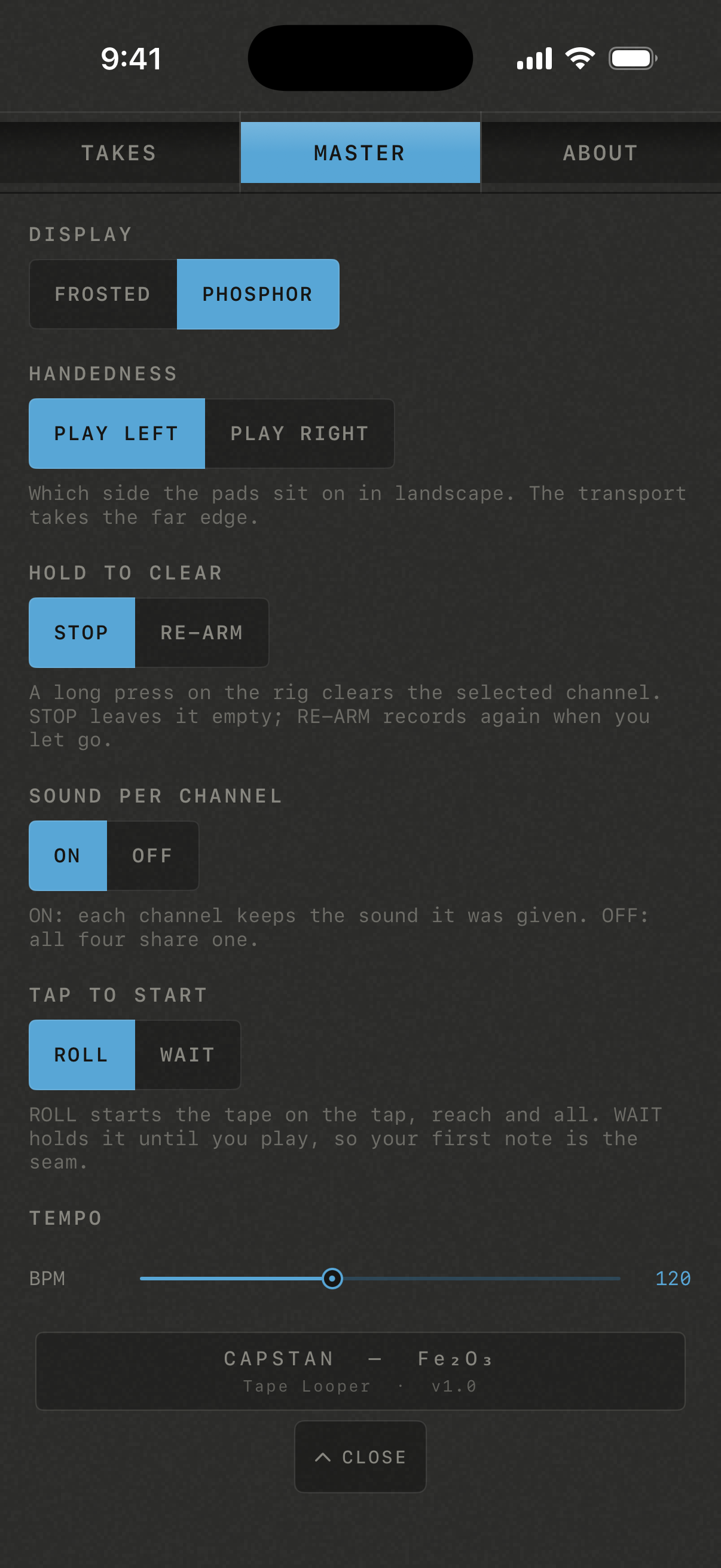
Three panes, and twice the pads.
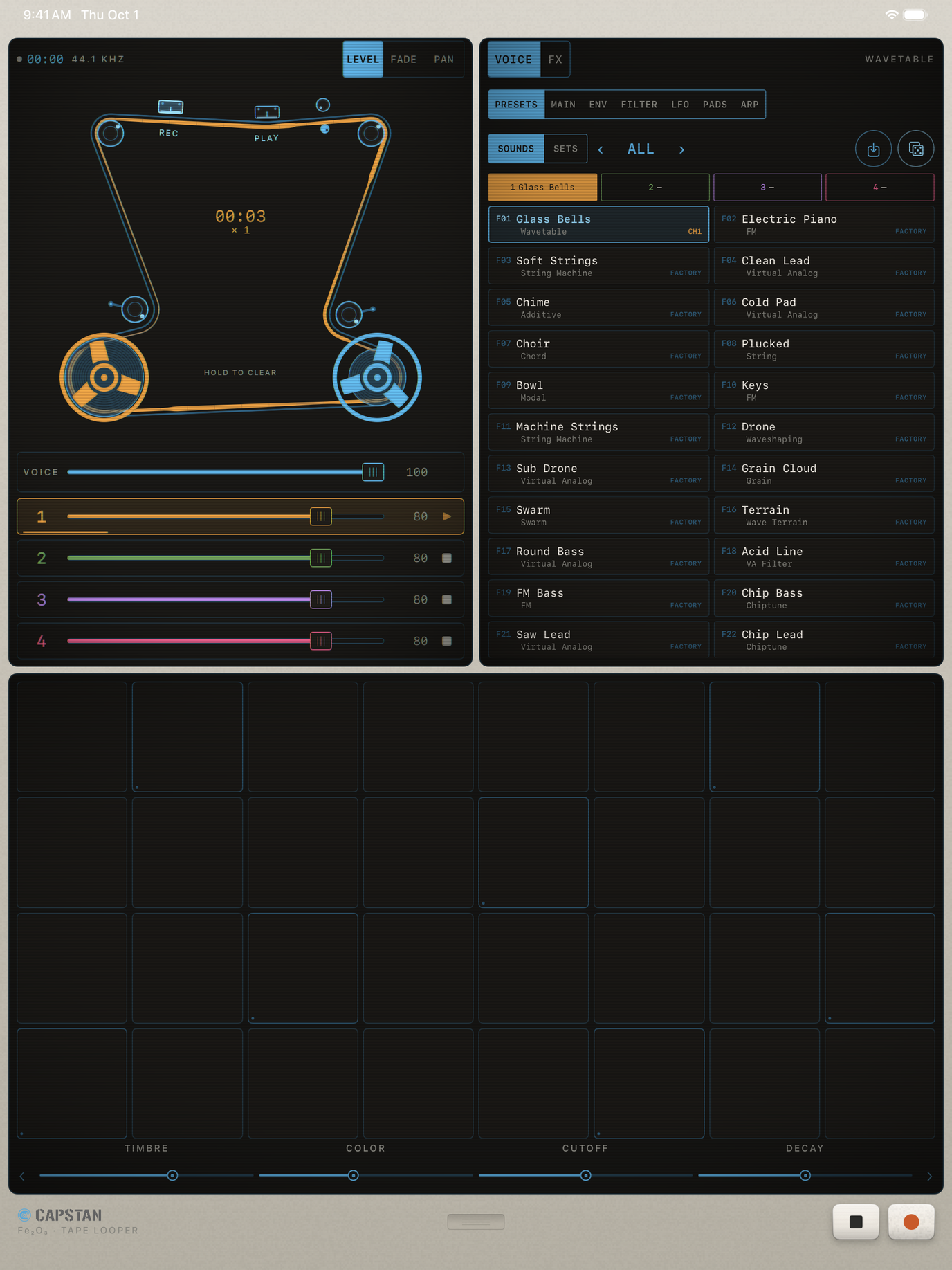
On iPad the deck and the four faders stay pinned, the sound and FX editor sits beside them, and the play surface doubles to thirty-two pads — nothing has to be switched away to see the loops while you shape a sound. Landscape or portrait, iPhone or iPad, it is the same machine, reflowed.